
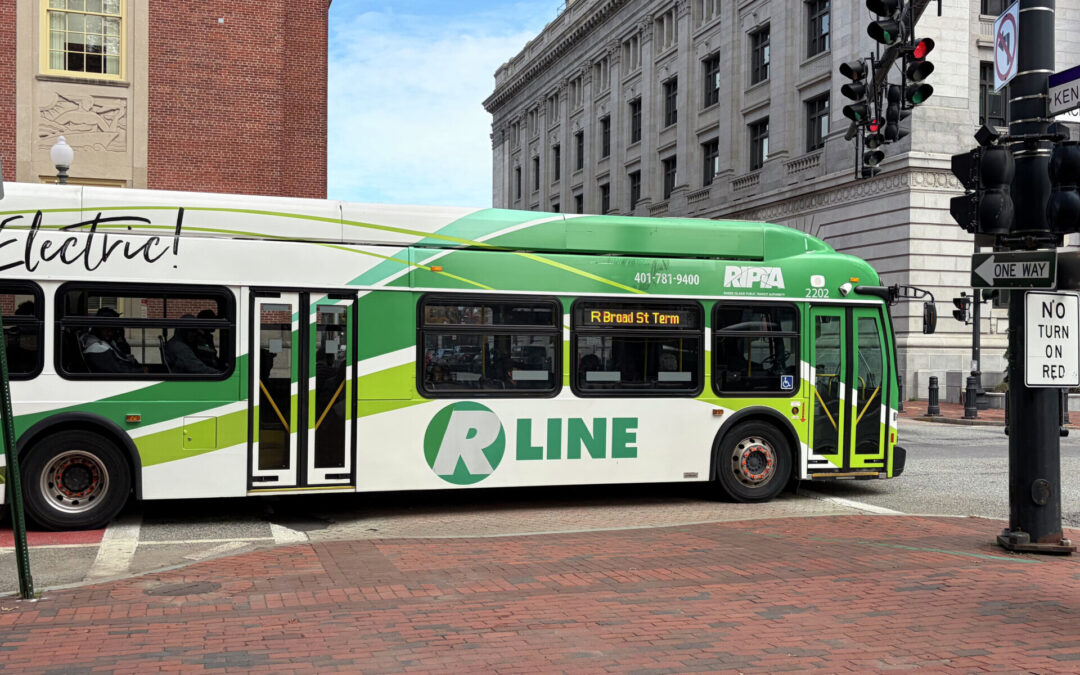
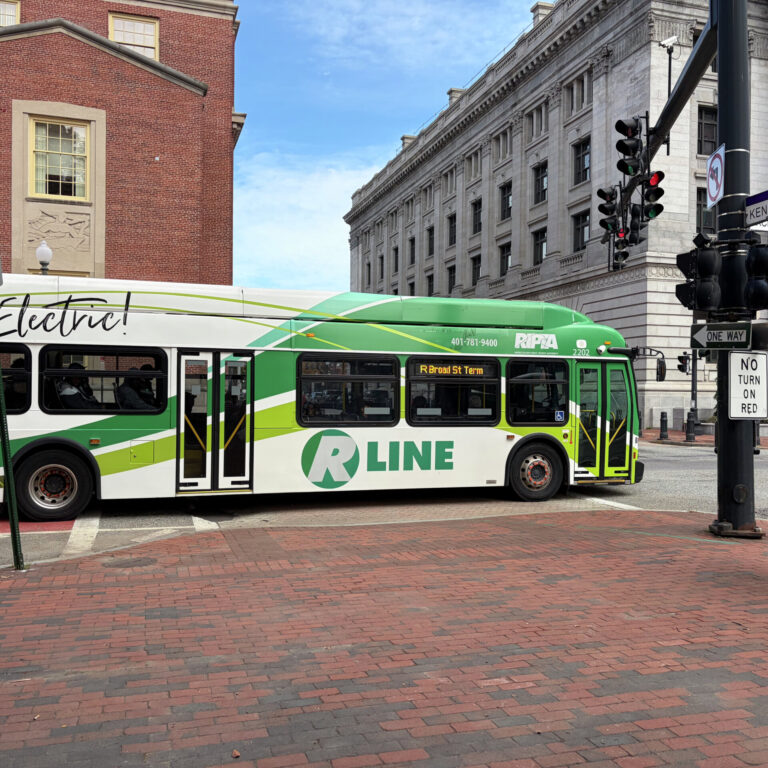
Diesel buses have a negative impact on the climate, and our health. In today’s episode, we look to Rhode Island, where the public bus company has been slowly rolling out electric buses on the busiest route in the city.
Megan Hall: Welcome to Possibly, where we take on huge problems like the future of our planet and break them down into small questions with unexpected answers. I’m Megan Hall.
Since 2022, Rhode Island’s public bus system, RIPTA, has been slowly rolling out electric buses. As of 2024, they have fourteen out on the roads. But RIPTA has over two hundred and thirty buses total… So are these fourteen really making a difference?
To find out, we talked to Leo Nachamie and Sarah Kramer from our Possibly team!
Leo Nachamie: Hey Megan!
Sarah Kramer: Hi !
Megan Hall: Okay, so why is RIPTA switching to electric buses in the first place?
Leo Nachamie: Well, they want to start replacing their traditional diesel powered buses, which cause two big problems.
Sarah Kramer: One- diesel buses run on combustion engines that burn, well, diesel. And that releases greenhouse gases that contribute to climate change. But the second problem with burning diesel is more immediate:
Erica Walker: That combustion leads to poor air quality, like it’s releasing particulates, all kinds of air pollutants that can harm the community, especially if they breathe it in and it gets into their bodies.
Leo Nachamie: That’s Erica Walker – she’s a Professor of Epidemiology at Brown University’s school of public health. She says that when we breathe in particles from diesel exhaust, they can get trapped in our lungs.
Sarah Kramer: Some of these particles are small enough to spread to other parts of our bodies, where they can build up too. And this exposure can lead to a lot of poor health outcomes like cancer, asthma, and heart disease.
Megan Hall: Okay, so burning diesel isn’t great for the air we breath or for climate change. But are there any other reasons to switch to electric busses?
Leo Nachamie: Well, diesel engines are REALLY loud, – we went and saw one for ourselves.
Leo Nachamie: Oh, here it is.. [bus driving up]
Sarah Kramer: And loud traffic noise isn’t just annoying. It can set off our bodies’ stress response. Erica says:
Erica Walker: That constant stimulation of that stress response can lead to some long-term negative cardiovascular and mental health issues.
Megan Hall: Okay – so diesel buses come with a lot of health risks. Are electric buses any better?
Sarah Kramer: Definitely – since electric buses run on batteries, they don’t release exhaust that pollutes the air.
Leo Nachamie: And even though most of Rhode Island relies on burning natural gas to produce electricity, charging electric buses still produces fewer greenhouse gases than diesel.
Sarah Kramer: And If RIPTA is able to charge them on a grid that’s powered by renewable energy, they’d create even fewer greenhouse gases.
Leo Nachamie: Plus, electric motors are much quieter than combustion engines.
Megan Hall: So why doesn’t RIPTA just switch all their buses to electric?
Leo Nachamie: Well, part of it has to do with cost. Electric buses are more expensive upfront, and you have to pay for a whole charging system for them.
Sarah Kramer: But studies have shown that in the long term, it does cost less to maintain electric buses, especially when diesel prices are really high.
Leo Nachamie: All of the health and climate benefits can also lead to big savings in terms of what we spend on public health and any school or work missed because of air quality related illnesses.
Megan Hall: But with so few on the road, are the fourteen we have right now really making that much of a difference?
Leo Nachamie: Well, RIPTA is making the most impact they can by driving their electric buses on their busiest route, the R-line. It runs about every 10 minutes and gets the most use out of any RIPTA route.
Sarah Kramer: And Erica says the R-line runs through areas with high rates of asthma and exposure to traffic-related pollution.
Erica Walker: They’re prioritizing a line that is frequently traveled and cuts through communities that would definitely benefit from the reduction in air pollution and the quietness that comes with the electric vehicles.
Leo Nachamie: So while the fourteen buses certainly aren’t the whole fleet, Erica is still hopeful.
Erica Walker: Any step in the right direction is a great step.
Sarah Kramer: And RIPTA does plan to bring electric buses to other parts of Rhode Island—specifically Newport and South County, but they’re waiting on some federal grant money to make that happen.
Leo Nachamie: For now, the few electric buses we have already are a good start.
Megan Hall: Great! Thank you, Leo and Sarah!
That’s it for today. You can find more information, or ask a question about the ways your choices affect our planet, at ask possibly dot org. You can also subscribe to Possibly wherever you get your podcasts or follow us on social media at “ask possibly”
Possibly is a co-production of Brown University’s Institute for Environment and Society, Ocean State Media, and WBRU.
See omnystudio.com/listener for privacy information.